PIES Library Entry: Why Missions Matter
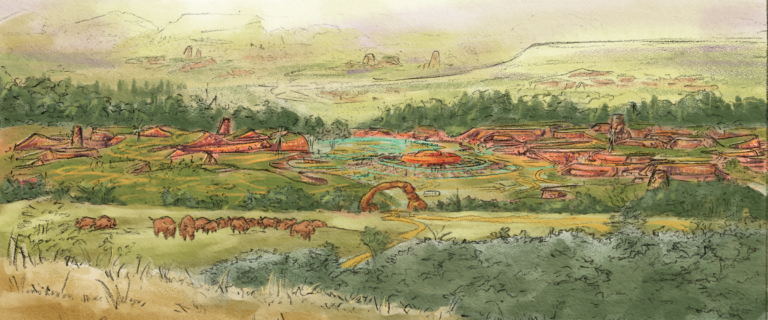
Mindfulness at Scale.

Introduction
Most companies have a mission statement. Far fewer are actually mission-driven.
A mission statement is simply a declaration of why an organization exists. It communicates purpose, direction, and identity to employees, customers, and stakeholders.
But a mission-driven organization goes much further. Its mission is embedded into decision-making, governance, strategy, and culture.
This distinction is critical, and it’s how an organization creates true value and aligns itself with long-term societal well-being.
The Mission of PIES
“Our mission is economic nirvana for people, our communities, and our planet.“
Table of Contents
- How Missions Work
- Why Missions Matter to Organizations
- Why Missions Matter to the Economy
- Introducing the New Economic Taxonomy
- Missions in the PIES Economy
- Where You Come In
- Conclusion
How Missions Work
Mission → Method → Impact
This is the formula for success; for building great and enduring organizations:
Mission
The mission identifies the genuine human need the organization seeks to address. A mission should not begin with a product, a technology, or even an industry. It begins with a question:
Why does this work need to exist in the first place?
Missions can be broad or narrow. What matters is not the scale of the mission, but whether mission success produces real societal value.
A strong mission provides:
- Direction
- Meaning
- Strategic clarity
Mission represents the north star of the organization.
Method
Method answers the question of how to pursue the mission.
Method includes the strategies, technologies, products, services, and labor that bring the mission to life. Methods are flexible. As technologies evolve and society changes, methods may change as well.
Method is mission in motion, while the mission remains constant.
Impact
Impact answers the question of what changes in the world if we succeed.
Impact is the measurable result of fulfilling the mission. It represents the value created for society. Impact might include:
- Healthier communities
- Cleaner ecosystems
- Stronger economies
- Improved quality of life
- New technological capabilities
Impact closes the loop between intention and outcome.
Mission Statement vs Mission-Driven
A mission statement defines intent. A mission-driven organization defines behavior. A truly mission-driven company integrates its purpose into routine business decisions and commits to sustaining that purpose over time.
In other words:
Mission Statement:
- Communicates purpose
- Often marketing-oriented
- Static statement
- Optional reference
Mission-Driven Organization
- Executes purpose
- Embedded in operations
- Living strategic framework
- Core decision filter
Organizations become mission-driven when their purpose guides:
- Strategic planning
- Hiring and culture
- Capital allocation
- Product design
- Governance and accountability
Why Missions Matter to Organizations
Missions aren’t just good for the needs being addressed, they’re good for the organizations pursuing them.
Mission Provides Strategic Direction and Flexibility
Organizations constantly face tradeoffs. Without a guiding purpose, the easiest metric becomes the dominant one. Under pressure from executive boards and shareholders, short-term profit often becomes the primary objective.
A clearly defined mission provides a decision framework that helps leaders answer questions such as:
- What problems are we solving?
- Which opportunities align with our purpose?
- What tradeoffs should we reject?
Mission therefore acts as strategic navigation for the organization.
Mission Aligns People Around Meaningful Work
Humans seek meaning in their work. Mission-driven organizations translate purpose into daily work, allowing employees to see how their contributions matter.
This produces:
- Stronger engagement
- Higher morale
- Deeper organizational loyalty
- Better collaboration
Shared purpose transforms employees from task-executors into mission participants.
Mission Builds Trust with Customers and Communities
Consumers increasingly expect businesses to contribute positively to society.
Companies that authentically support meaningful social or environmental goals tend to earn greater loyalty and trust from customers.
Mission-driven organizations signal that they are not solely extracting value from markets, they are contributing value to society.
Trust is not created through advertising; it is created through consistent alignment between mission and action.
Mission Encourages Long-Term Thinking
Short-term incentives often push organizations toward behaviors that undermine long-term success.
Mission-driven leadership counters this tendency by anchoring strategy in a purpose that extends beyond quarterly results.
This helps organizations prioritize:
- Sustainable growth
- Durable customer relationships
- Responsible stewardship of resources
- Innovation aligned with real needs
Purpose therefore functions as a stabilizing force in complex economic environments.
When entire sectors of the economy organize around meaningful missions, innovation accelerates and resources coordinate toward solving real problems.
Why Missions Matter to the Economy
Mission-driven leadership is not only valuable for individual organizations; it is also critical for the design of healthy economic systems.
Mission-Driven Leadership at Scale
In the same way that missions provide direction, meaning, and strategic clarity to organizations, they can do the same for economies. The biggest thing that changes is the scale, but the scope also changes.
Missions act as unifiers. They allow for multiple parties of varying types, bringing diverse perspectives, to work together towards a greater goal. This has led to some of the greatest successes in modern history.
Missions in Practice
In Mission Economy: A Moonshot Guide to Changing Capitalism, economist Mariana Mazzucato argues that the most successful economic transformations occur when institutions organize around clear missions.
Historical examples include:
- The Apollo program
- Public health initiatives
- Major infrastructure systems
- Large-scale technological breakthroughs
In these cases, coordinated missions aligned multiple actors — governments, businesses, researchers, and workers — toward solving a shared challenge.
Mission therefore acts as a coordination mechanism for innovation and progress.
But, what about at scale? How do you coordinate an entire economy?
The Need for Needs
Today’s economy is disconnected from its true purpose. An economy is supposed to produce a way of life worth living, but instead, our economy burns us all out. It’s not meeting our needs because it’s not rooted in needs.
That’s what missions express: needs. Needs aren’t just about survival, they’re comprehensive and broad. Needs can include wants. Needs are about what it takes to live well, and why we need it.
What vs Why
Our economy tries to produce the “what” that it takes to live well, but it doesn’t understand the why. When an economy loses focus on the “why”, and instead focuses on the “what”, we can get stuck in our ways. Pretty soon, the “what” becomes the “why”, and businesses simply exist to do what they do. The auto industry produces cars. The agriculture industry produces crops.
This becomes a problem because the “why” gets lost.
Why do we produce cars? To sell cars? No, because we need transportation. Yet, cars aren’t always the best solution to transportation. If we don’t understand why we’re producing cars, we may become over-dependent on them.
Why do we produce crops? To sell crops? No, because we need nourishment, clothing, medicine, and more. If factory farming and mass-production shortcuts are poisoning our food, is that food really nourishing us? If the only priority is profit, agriculture becomes unbalanced and unsustainable.
When an economy understands the “why”, we look at things differently.
Introducing a New Economic Taxonomy
A taxonomy is a way of categorizing something. When talking about the economy, people usually categorize by industry. Industries are usually broken down into things like agriculture, manufacturing, etc. This is a good way of describing what a business is doing, but it leaves implicit all the reasons why to do it.
Ideally, economic activity should be categorized in a way that reveals its importance and purpose. Our categorizations should also be timeless and flexible enough to adapt as civilization evolves. To that end, PIES presents a new taxonomy for economic activity, broken down into three distinct layers.
Layer 1: Domains of Fundamental Human Needs (Mission)
This layer distinguishes the purpose for conducting business. It relates economic activity to fundamental human needs, broken down into the following 8 domains:
- Planetary Life Support
- Nourishment & Physical Survival
- Health & Human Support
- Culture, Community & Civic Flourishing
- Learning & Personal Development
- Mobility & Access
- Stability, Security & Justice
- Coordination of Value & Resources
Layer 2: Universal Labor Types (Method)
This layer speaks to the type of labor that primarily supports the Mission being served. This category distinguishes the skills, resources, and effort that goes into conducting business. There are 5 universal labor types:
- Core Production
- System Construction
- Direct Service
- System Stewardship
- Research & Advancement
Layer 3: System Roles (Impact)
This layer completes the loop by distinguishing the timelines and relational importance of organizations. These 5 Impact categories help illustrate the interdependencies of organizations across missions and methods:
- Foundational
- Enabling
- Direct-Outcome
- Stabilizing
- Transformational
Why Missions Matter to the PIES Economy
The PIES Economy is designed around the idea that ownership and capital markets shape the direction of the broader economy.
Because public markets allocate enormous economic power, the organizations within them must be guided by clear purpose.
Businesses that publicly list on the PIES Exchange are required to be mission-driven. Their mission will be categorized according to the taxonomy laid out in the prior section. This requirement accomplishes several goals:
Structural Transparency
Every company must clearly declare the problem it exists to solve.
Investor Alignment
Investors evaluate companies based on their ability to fulfill their mission, not merely generate short-term profit.
Long-Term Accountability
Mission commitments create expectations for consistent behavior over time.
Economic Direction
When capital flows toward mission-driven enterprises, markets begin to coordinate around solving real societal needs.
In this way, mission-driven leadership becomes a foundational governance principle rather than a marketing exercise.
Where You Come In
Turning Stakeholders into Shareholders
PIES does not reject the power that shareholders have. It embraces it. Stock markets are a way of distributing ownership of valuable and powerful businesses. That power must be distributed mindfully.
Our economy is vast and highly interconnected. Virtually every business in the country affects virtually every one of us. The bigger the business, the bigger the influence. That makes us all stakeholders, and stakeholders have valuable perspective.
These businesses need the stewardship that perspective offers. They need to see the bigger picture of their impact and adjust their methods accordingly. The only way that happens is when stakeholders get the power offered by ownership.
So, we do something simple but powerful: we turn stakeholders into shareholders.
How it Works
Pricing and Access
Our pricing is designed to be most cost-effective to the people with the smallest portfolios. More fortunate individuals pay the way for the infrastructure through a transparent, consistent, and predictable algorithm. This paves the way for you to become a directly-registered shareholder in all the companies and missions you care about.
Voting and Accountability
After making it easier to become a shareholder, we make it easier for you to express your perspective. Our voting rights are augmented to reward patience and to balance power dynamics. That means your voice matters even with a small slice of the pie. Help guide businesses towards meaningful missions and hold them accountable to mission success as a stakeholder with shareholder rights.
Mission Success and Dividend Rights
When meaningful missions are accomplished, it almost always results in enduring organizations and great financial success. When it’s time to reap the rewards, we again use transparent, consistent, and predictable algorithms to more fairly distribute rights. That means dividends for all and a steady flow of cash to build your portfolio or spend as retirement income.
Your Impact
You’re not just building a portfolio, you’re influencing industries. And, you’re not alone. The PIES Economy is for everyone. When millions of people come together to thoughtfully and patiently shape the economy, truly amazing things will happen.
Slowing Down
The PIES Economy is designed to financially incentivize a slower pace of trading. This helps you become a shareholder, but it also has downstream effects on investing strategy and business governance. This is patience personified in math.
Shareholder rights further incentivize long-term investing strategies and shift focus away from short-term profit.
Slow is Fast
Going slow allows the organization to focus on the mission. Maintaining mission focus improves operational strategy and long-term success. Long-term success outpaces short-term profit chasing.
Mindfulness at Scale
When the entire economy is focused on long-term societal benefits, success falls into place. With every organization focused on a mission, and each mission connected to a network of genuine human needs, the economy works for us, instead of us working for it.
Economic Nirvana
Economies shape our way of life. What way of life do you want? What economy supports it?
The PIES Economy is an infrastructure for you to shape your ideal economy and your ideal way of life. That’s our promise of economic nirvana.
Conclusion
Mission statements alone do not create meaningful organizations.
Mission-driven leadership requires that purpose guide the daily decisions, incentives, and structures of the business itself.
When mission becomes operational:
- Employees gain meaning in their work
- Customers gain trust in the organization
- Leaders gain clarity in decision-making
- Economies gain direction
For the PIES Economy, mission-driven leadership is not optional.
It is the mechanism that ensures economic activity serves human flourishing rather than drifting toward purely extractive outcomes.
Thank you for reading.